Matera’s rock churches and Murgia Park: how to visit
Updated October 25, 2026 · 6 min read
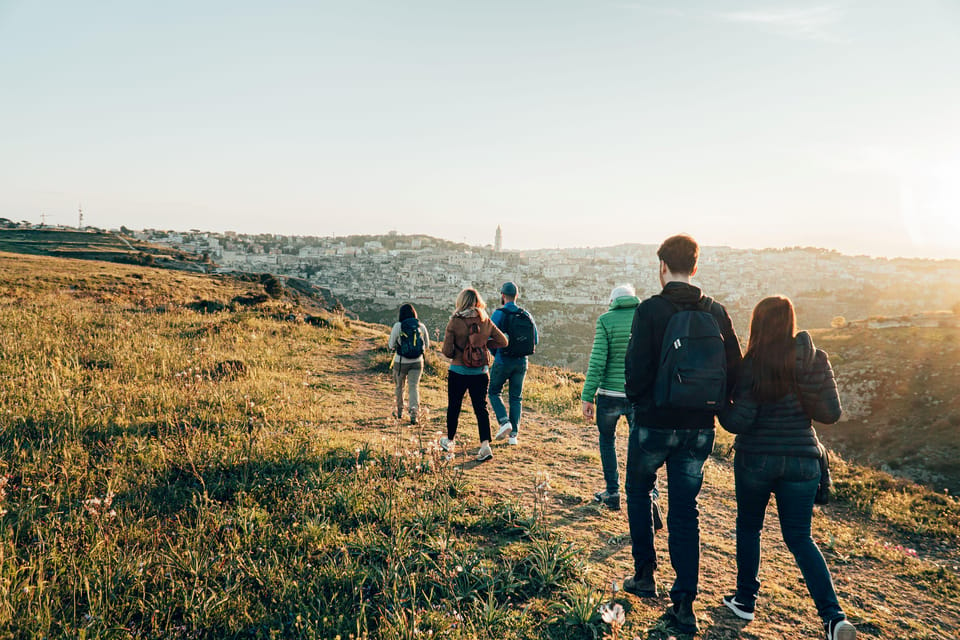
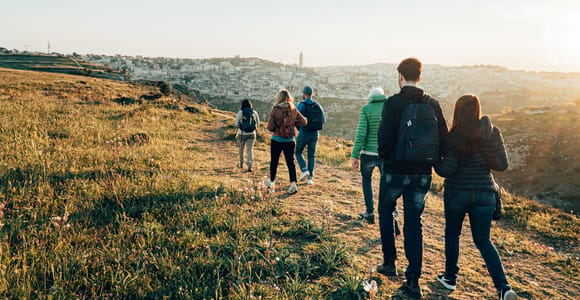
The Murgia is not a distant add-on to Matera. It is the limestone plateau directly across the Gravina, and UNESCO treats it and the Sassi as one cultural landscape. From the city you see caves and dark openings; from Murgia Timone you finally see how the built city fits the ravine.
What is different from the Sassi
The Sassi are an inhabited urban fabric. The park is open limestone terrain cut by ravines, paths, caves, shepherd routes and rock-cut sacred spaces. UNESCO records houses, monasteries and hermitages within a property of 1,016 hectares; the wider protected park covers about 8,000 hectares.
Do not use “rock church” as if every site were the same. Some preserve frescoes, some are architecturally legible but sparse, and some are closed or accessible only under particular arrangements. Confirm the exact church and admission with the operator rather than assuming a generic park tour enters one.
Guided visit or viewpoint only?
For a first look, the Belvedere di Murgia Timone gives the defining panorama. A viewpoint stop is enough if your aim is photography and you have limited time. A guided walk is worth the extra time when you want to understand settlement, worship and the relationship between caves and plateau.
The park’s official Trail 408 starts at the Murgia Timone belvedere and reaches Madonna delle Croci. It is described as a simple hiking route taking about 2 hours 15 minutes, but the park still calls for hiking shoes or sturdy trainers. “Simple” does not mean paved, shaded or suitable for every visitor.
The Murgia Timone sunset tour with transfer and rock-church admission is the practical choice for most travellers without a car. It starts at €42 in the current data and removes the transport problem. A Murgia Materana tour at sunset suits visitors who want more landscape and less of a quick overlook.
Heat, light and safety
The plateau is exposed. In warm weather, favour early morning or late afternoon, carry water and do not count on shade. After rain, limestone and descent paths can be slippery. Sunset is visually rewarding, but darkness arrives quickly; a transfer avoids navigating an unfamiliar trail after the light goes.
Stay on marked routes and treat closures seriously. This is a protected archaeological and natural landscape, not an open-air shortcut between every visible cave. For current options, compare Murgia Materana tours and confirm footwear, walking time, church access and return transport on the booking page.
Our recommendation: see the Sassi first, then cross to the Murgia. The reverse view turns a beautiful city into an understandable landscape.