Wine and food tasting in Matera: what should you book?
Updated October 25, 2026 · 6 min read
Matera’s food experiences fall into four genuinely different formats: a seated tasting in the Sassi, a wine-led pairing, a walking street-food tour and a hands-on cooking class. The right choice depends less on appetite than on whether you want place, wine knowledge, a city walk or a practical activity.
Choose the setting before the menu
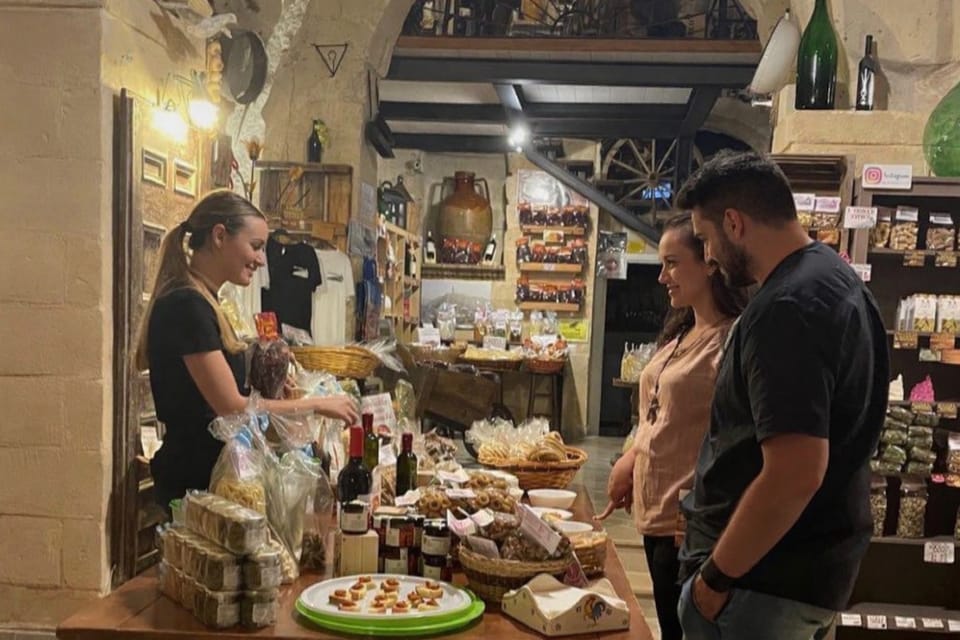
The local food and wine tasting in ancient Sassi caves is the most Matera-specific introduction. Its listed setting is an old cave dwelling, with a historic oven, loom, mule cave and cisterns forming part of the visit. That makes the room and its former uses part of the experience rather than decoration.
This is a good first tasting for travellers who want a compact activity without another long walk. It is less suitable if your priority is a systematic wine lesson: a picturesque setting does not automatically mean a deeper comparison of grapes, vintages or production methods.
When wine should lead
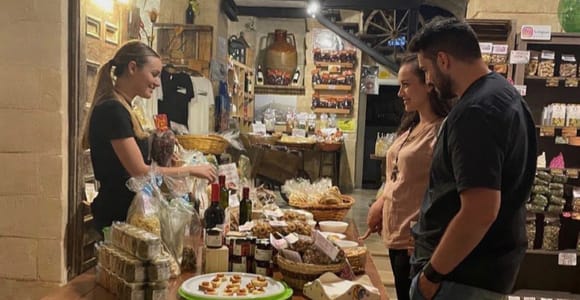
Choose the small-group wine tasting and food pairing when the glasses matter more than the architecture. Another option pairs four wines with local cheeses and cured meats in a historic wine bar. Check the booking page for the exact number of wines, food portions and language on your date; “tasting” can describe anything from a light aperitivo to a substantial meal substitute.
The food category currently starts at €19 and has a €95 median, but those figures mix short tastings, walks and longer classes. They are not like-for-like prices. Compare duration and inclusions before deciding that one experience is expensive.
Walk or cook instead
A street-food walk makes sense when you have not yet taken a Sassi tour. It adds orientation between bites and can introduce peperoni cruschi and handmade pasta in context. Its weakness is overlap: if you already booked a two-hour city walk, paying for another guided circuit may repeat the same lanes and historical introduction.
A pasta class is the opposite choice. You spend more time in one place, learn a method and usually eat what you prepare. It works well on a rainy afternoon or for travellers who prefer doing to listening. Confirm accessibility, standing time, dietary needs and whether wine is optional before booking.
Do not stack similar experiences
One tasting plus one ordinary meal usually reveals more than two tastings in succession. Use a food activity to answer one question: how a cave space was used, how local wines differ, what people snack on, or how pasta is made. Then leave room to choose a bakery, market counter or restaurant independently.
For most first-time visitors, we favour the cave tasting because its setting cannot be detached from Matera. Wine enthusiasts should choose the wine-led pairing instead, while families and keen cooks may get more from a practical class. Compare the current food tours and tastings in Matera and read the inclusions rather than booking by the photograph alone.